

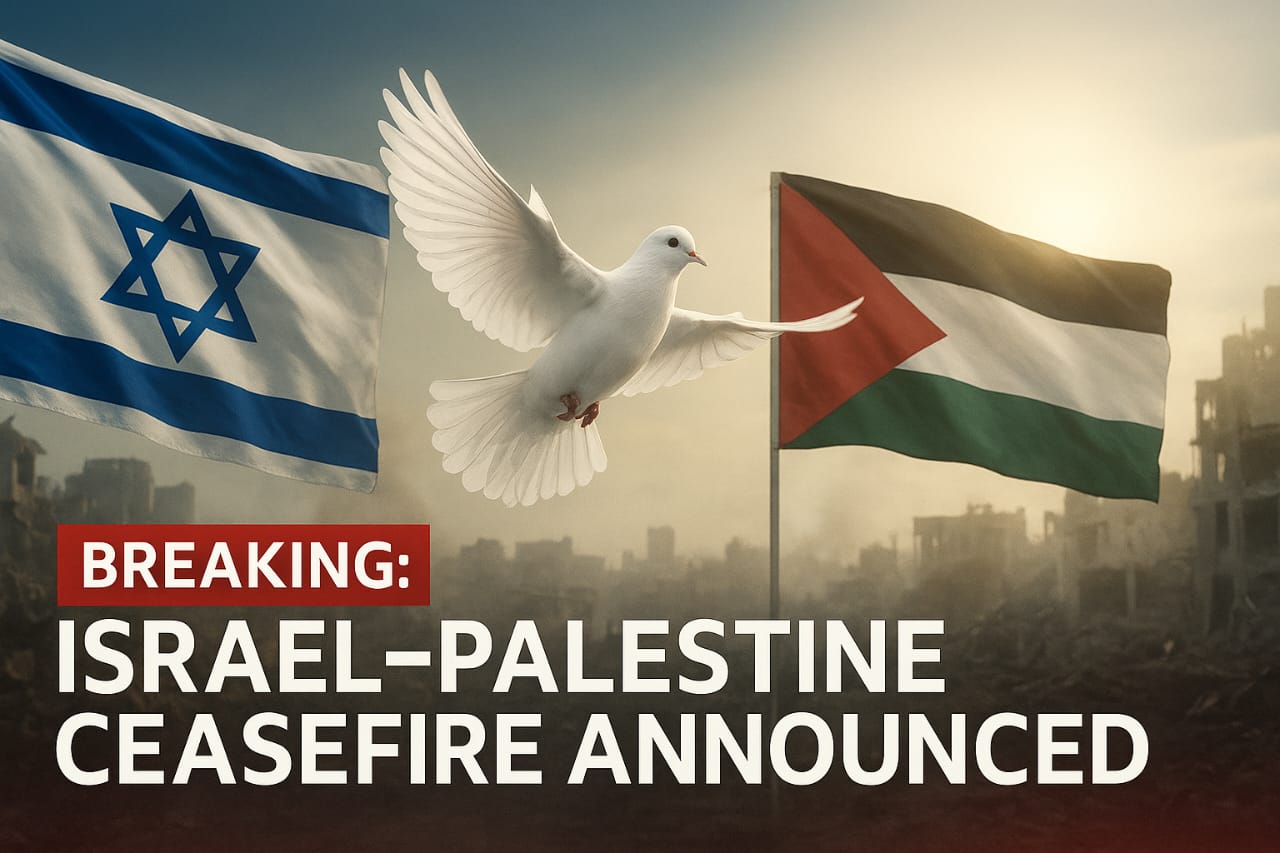
Israel Palestine Ceasefire News: A Tentative Truce
The most recent Israel Palestine ceasefire news brings a delicate pause to months of intense conflict. After prolonged negotiations involving multiple mediators, a truce was declared that halts active hostilities — but it comes with considerable caveats. While many hope this marks the beginning of a longer peace process, the agreement remains fragile and contingent on compliance from both sides.
Background: Why the Ceasefire Was Reached
This Israel Palestine ceasefire news comes after a severe escalation in violence that devastated civilian populations and infrastructure. Mediation by Egypt, Qatar, the United States, and the United Nations was central in brokering the ceasefire. The parties agreed to halt airstrikes, rocket fire, and ground incursions, while opening humanitarian corridors for aid and initiating prisoner and hostage exchanges.
Historically, such truces have faced setbacks or collapse because deep mistrust and unresolved political issues loom behind the terms.
Key Terms of the Ceasefire Agreement
-
Mutual Ceasefire of Military Actions: Both Israel and Palestinian forces agreed to pause offensive operations.
-
Humanitarian Corridor Openings: Selected border crossings opened for delivery of food, medicine, and fuel under strict monitoring.
-
Hostage and Prisoner Swaps: Negotiations arranged to exchange captured individuals from both sides.
-
Verification Mechanisms: International monitors and observer teams to check compliance.
-
Gradual Reopening of Crossings: For limited movement of persons and medical evacuations.
These terms reflect major elements in the Israel Palestine ceasefire news framework, but implementation remains the critical test.
Early Impacts on Civilians
According to current Israel Palestine ceasefire news, civilians in Gaza and affected parts of Israel have experienced a brief respite. Displaced families are cautiously returning to damaged homes, medical facilities are receiving previously blocked supplies, and some areas are seeing reduced violence.
Yet major humanitarian challenges persist. The UN World Food Programme reports that despite the aid flow, only a fraction of required supplies reach northern Gaza. Hospitals remain overwhelmed, water and electricity infrastructure badly damaged, and many neighborhoods are still under rubble. Critics warn that unless aid logistics improve, famine and disease may spread.
International and Regional Reaction
The Israel Palestine ceasefire news has evoked widespread global response. The United Nations, European Union, and many Arab states welcomed the ceasefire as a necessary humanitarian measure. ✔ Some countries have called for expansion of international monitoring and more robust peace mechanisms.
Hamas has reaffirmed commitment to the truce and pledged to return the remains of deceased Israeli hostages, despite delays. Israel, meanwhile, has accused Hamas of ceasefire violations and demanded complete cooperation in handing over bodies.
In Israel, some see the ceasefire as an opportunity to repair its international image, after criticism over the humanitarian toll of the war.
Risks, Challenges, and What Lies Ahead
Even under the truce, the Israel Palestine ceasefire news is clouded by several serious challenges:
-
Ceasefire Violations: Both sides already trade blame for infractions — small skirmishes, stray fire, or claims of targeting near borders.
-
Bodies & Hostages Dispute: Hamas has returned some bodies, but Israel says many remain unmoved, claiming Hamas is withholding.
-
Insufficient Aid Flow: The volume of aid entering is not meeting the dire needs, especially in Gaza’s north.
-
Political Impasse: Questions of governance in Gaza, disarmament of militants, and broader Israel-Palestine relations remain unresolved. AP News+1
-
Fragile Trust: Longstanding mutual suspicion means any new provocation could unravel the truce quickly.
To survive, this ceasefire demands strong international oversight, accelerated aid delivery, and renewed political will from all parties.
Bullet Point Highlights
-
The Israel Palestine ceasefire news marks a temporary halt to active conflict.
-
The agreement includes ceasefire, aid corridors, and prisoner exchanges.
-
Civilians see some relief, but humanitarian needs remain overwhelming.
-
Global actors have welcomed the truce and urged robust implementation.
-
Core issues like governance, disarmament, and accountability remain unresolved.
Conclusion:
The Israel Palestine ceasefire news offers a fragile but vital pause in one of the region’s most protracted conflicts. It opens a window for humanitarian relief, diplomacy, and possible confidence-building. Yet, without sustained political momentum and effective enforcement, this ceasefire risks being just another short-lived interval between rounds of violence.
The success of this truce will depend on whether both Israel and Palestinian actors convert agreement into action — honoring commitments, allowing aid without obstruction, and negotiating solutions to the deeper causes of conflict. If they do, this ceasefire may well become the foundation for a more lasting peace. If they don’t, it may simply fade into broken promises and renewed warfare.
Leave a Reply