

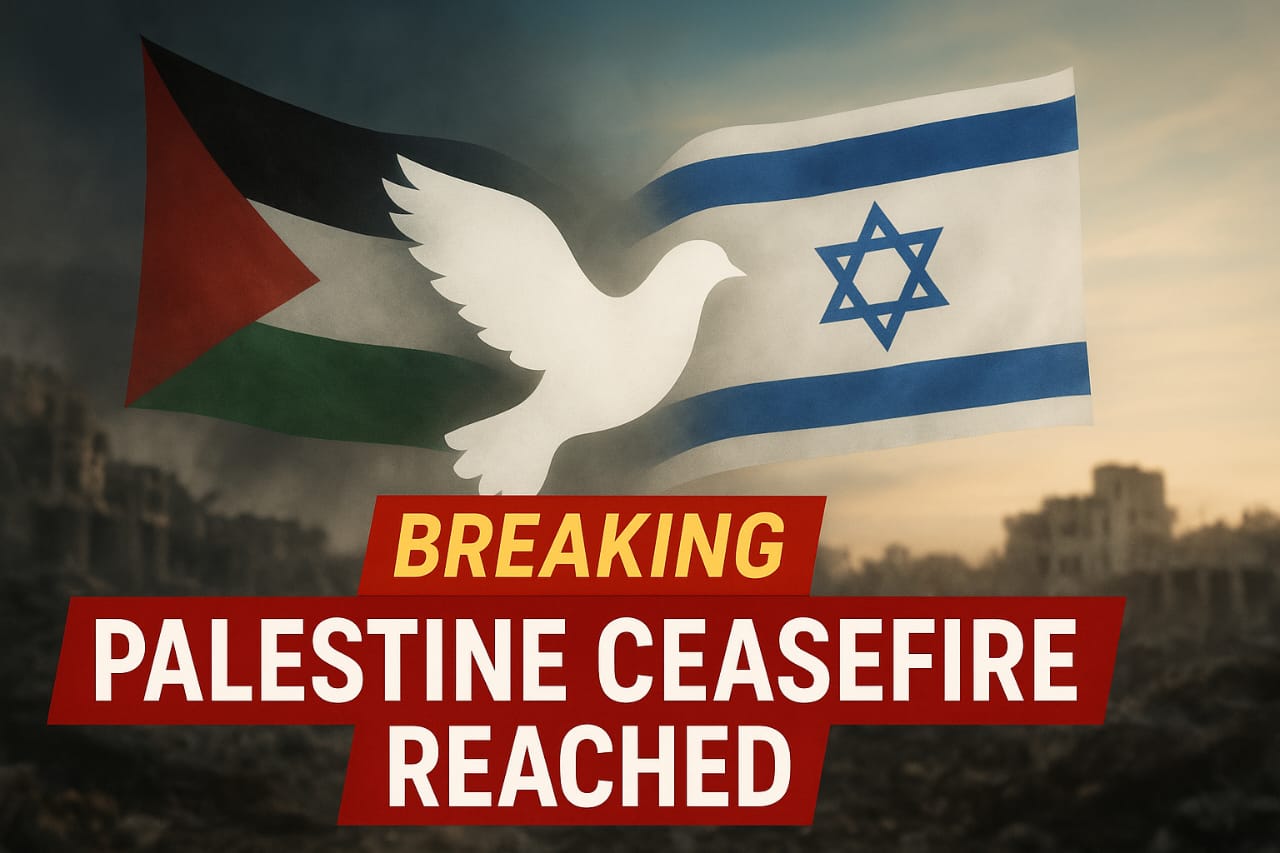
Palestine Ceasefire News: A Fragile Moment of Calm
The latest Palestine ceasefire news has brought a brief moment of hope to millions affected by months of intense conflict. After days of negotiation involving regional mediators, international pressure, and humanitarian appeals, a fragile truce has finally been announced. While the ceasefire offers relief to civilians, experts warn that the road to lasting peace remains long and uncertain.
Background: What Led to the Ceasefire
This Palestine ceasefire news follows one of the most violent escalations in the Gaza conflict in recent years. Thousands of civilians were displaced, infrastructure destroyed, and hospitals overwhelmed. The ceasefire was mediated by Egypt and Qatar, with active involvement from the United States and the United Nations.
The agreement reportedly includes mutual cessation of hostilities, limited reopening of border crossings for humanitarian aid, and potential discussions on prisoner exchanges. Despite these developments, skepticism remains due to the history of short-lived truces in the region.
Key Points of the Ceasefire Agreement
-
Humanitarian Aid Access: Trucks carrying food, fuel, and medicine are now entering Gaza under strict monitoring.
-
Hostage and Prisoner Exchange: Talks are underway for an exchange process facilitated by international mediators.
-
Border Control: Israel agreed to partially open crossings for limited trade and medical evacuation.
-
Cease of Military Operations: Both sides agreed to stop airstrikes, rocket fire, and ground incursions.
These provisions aim to bring short-term stability, but much depends on whether both parties respect the terms.
Immediate Impact on Civilians
According to Palestine ceasefire news reports, the ceasefire has brought temporary relief to war-torn neighborhoods. Families displaced by bombings have cautiously returned to inspect their homes, while hospitals are now receiving critical supplies that had been blocked for weeks.
However, humanitarian agencies warn that the aid entering Gaza is far from sufficient. The UN World Food Programme reported that although 560 tonnes of food are entering daily, it’s still not reaching northern Gaza — one of the hardest-hit areas. Clean water, electricity, and medical support remain severely limited.
The silence of guns has brought calm, but not yet comfort. Many residents fear the fighting could resume at any time if negotiations fail.
International Reaction to the Ceasefire
The announcement of Palestine ceasefire news was met with mixed global responses. The United Nations and European Union welcomed the move, urging both sides to engage in meaningful dialogue. The Arab League called the ceasefire a “step toward humanitarian dignity” and pressed for accountability for war crimes.
Meanwhile, international NGOs emphasized the importance of long-term peace efforts, not just temporary truces. Western nations have also urged for continuous monitoring of ceasefire violations and more aid access to Gaza’s most vulnerable populations.
In Washington, the U.S. administration praised the truce as “a vital humanitarian necessity,” while urging Israel and Hamas to commit to diplomacy over escalation.
Challenges and the Road Ahead
Despite the progress reported in Palestine ceasefire news, experts warn that the ceasefire is extremely fragile. Deep mistrust between both sides, unresolved political disputes, and the ongoing humanitarian crisis pose serious risks to stability.
Future peace depends on several key factors:
-
Sustained International Mediation: Without neutral monitoring, violations could quickly reignite hostilities.
-
Humanitarian Reconstruction: Gaza’s destroyed infrastructure requires billions in aid for schools, hospitals, and homes.
-
Political Reconciliation: The internal divide between Palestinian factions remains a major obstacle to unified governance.
-
Accountability and Justice: Allegations of war crimes on both sides must be addressed for long-term reconciliation.
Unless these issues are dealt with transparently, the ceasefire may serve only as a temporary pause before renewed violence.
Bullet Point Summary
-
The Palestine ceasefire news brings temporary relief after weeks of fighting.
-
Ceasefire terms include aid access, prisoner talks, and border easing.
-
Humanitarian aid remains critically insufficient in northern Gaza.
-
Global powers welcome the truce but warn of its fragility.
-
Sustainable peace requires political, economic, and humanitarian cooperation.
Conclusion:
The Palestine ceasefire news represents a rare moment of unity amid years of division and devastation. It offers a glimpse of what peace might look like families reunited, aid trucks crossing borders, and a brief silence after months of chaos. Yet, the fragility of this agreement cannot be ignored.
Long-term peace will require more than just a temporary truce. It demands political courage, humanitarian commitment, and sustained international pressure on all parties to prioritize people over politics.
Leave a Reply